
250 years+ and futures for an iconic corner
Welcome to July! In this issue:
- Concept summaries from the three teams invited to reimagine our historic Haight-Ashbury property
- Native perspectives on 250 years
- On the road with William Haas’ travel trunk
- Heritage Happy Hour at an indie music haven
- A guess where from Woody
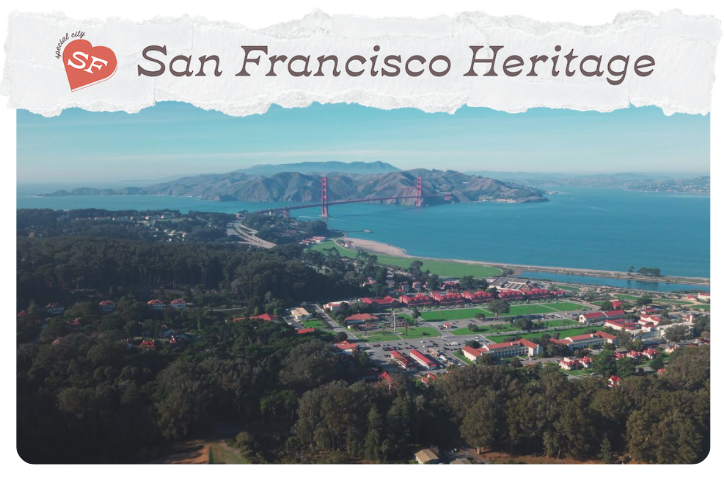
But first, a Presidio history walk!

Main Post Walk on July 19
At our gala last month, we spotlighted the Presidio Trust’s shared work caring for the national park’s 1,500 acres and over 800 buildings (around 500 of which are considered historic). Our short feature beautifully produced with +M Productions highlights a couple of exceptional achievements accomplished over the past three decades:
Post to Park feature on the Presidio Officer's Club and Battery Bluff.
But now we have more Presidio fun for you. The Main Post is a stunning and defining area of the park, and we are opening up a few spots on a special history walk with retired NPS ranger John Martini on Sunday, July 19, 2026.
The 1.5 hour tour of the Main Post and Parade Grounds will cover the dizzying variety of historic military architecture, the new Tunnel Tops site, and more.
When: Sunday, July 19, 2026 at 10 am
How Much: $30, but Special City Local Hero and Landmark Club members can get a half-off deal.
Where: Presidio Main Post. Meeting spot will be shared after purchase.
Only a few spots are available so sign up now!

Haight Ashbury Visions
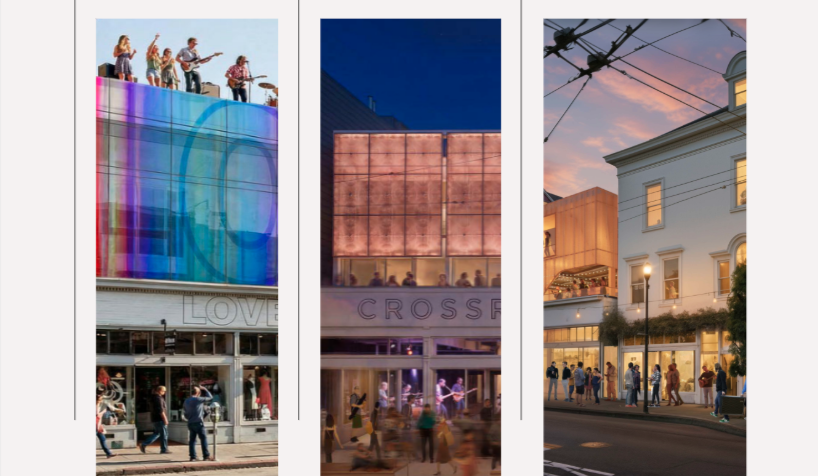
Review the three proposals to reinvision the Doolan-Larson House and Storefronts
On Friday, June 12, 2026, three invited teams delivered proposals to honor and reimagine SFH’s historic Doolan-Larson House and Storefronts at the world-famous intersection of Haight and Ashbury streets. The executive summaries of these proposals are now available for the public to view.

Thank you to Crossroads Haight/Ashbury, Studio Terpeluk, ARG + KEXP, Blue Bear School of Music, Gensler, Page & Turnbull + LOVEHOUSE – Tannerhecht Architecture for sharing their visions to serve the Haight-Ashbury neighborhood, the city, and the cultural legacies embodied at this historic site.
Visit haightandashbury.org to read all about the Doolan-Larson Request for Proposal process, and our community survey is open anytime you’d like to share feedback as we move along.

More than 250 years
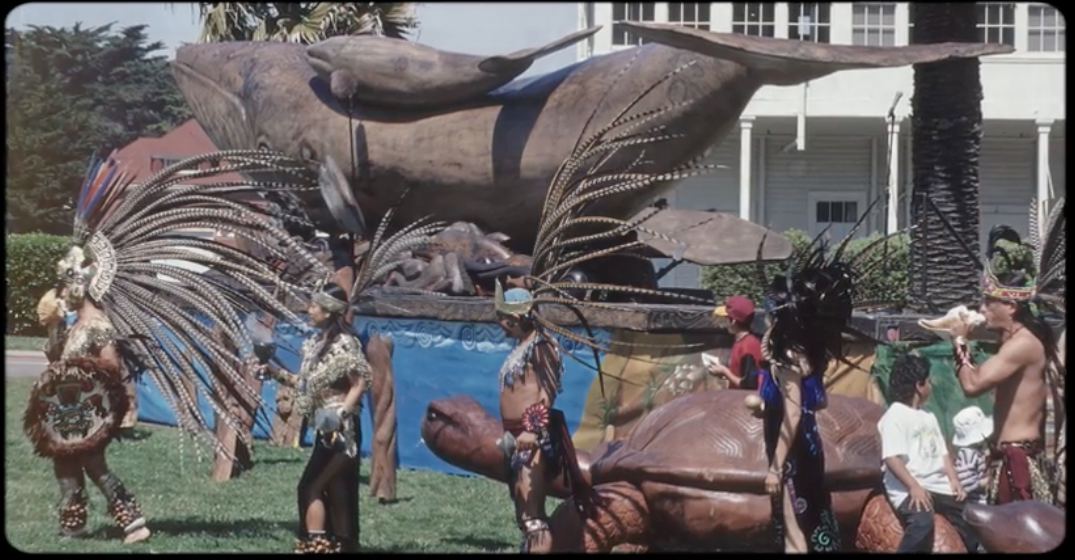
historic preservation orgs and Native communities working together to create more inclusive narratives about the Presidio’s past and present
“History did not start here in 1776. This land had been cared for and loved for 10,000 years plus by Ohlone ancestors, the Ramaytush Ohlone people.”
—Melissa Nelson, PhD, Chair, The Cultural Conservancy
Native people are usually sidelined or written out in the stories of our country’s founding even though their autonomy and land were a major reason for the American colonists rebellion against the crown. (more in podcast form).
This year marks not only the 250th anniversary of the signing of the Declaration of Independence, but also the Spanish arrival in what is today called San Francisco.
Native people were here more than 10,000 years before the de Anza party and are still here today. As part of our Post to Park gala on June 4, we shared “Beyond the Post,” a short video on the accountability, cultural revitalization, and natural restoration happening in the Presidio in response to 250 years of colonization and displacement.
SF Heritage board member Sharaya Souza (Taos Pueblo, Ute, Kiowa) and others note in the film how the partnerships in the Presidio today, the efforts to heal and reconcile, could be a model for the entire city and beyond.
Beyond the Post: Native Land Stewardship in the Presidio
Want to learn more and join the discussion? We recommend the “Native Perspectives Truth, Healing & the Future of U.S” talk on July 4 featuring Sharaya as part of the Future of Us Festival. Saturday, July 4 from 12:00–1:15 pm. The Pearl, 601 19th St, San Francisco, CA 94107
Travels with William
where did the giant trunk go?
Many of you may be going on trips this summer with your suitcase or bag of choice. Back in the Gilded Age, a standard travel companion was a large trunk, meant to accommodate increasingly popular (and lengthy) transatlantic crossings. These could hold an array of ensembles and accessories for varying social encounters—a priority for those of means and social standing.
Nineteenth-century clothing was layered and heavy, so packing light has always been a concern!
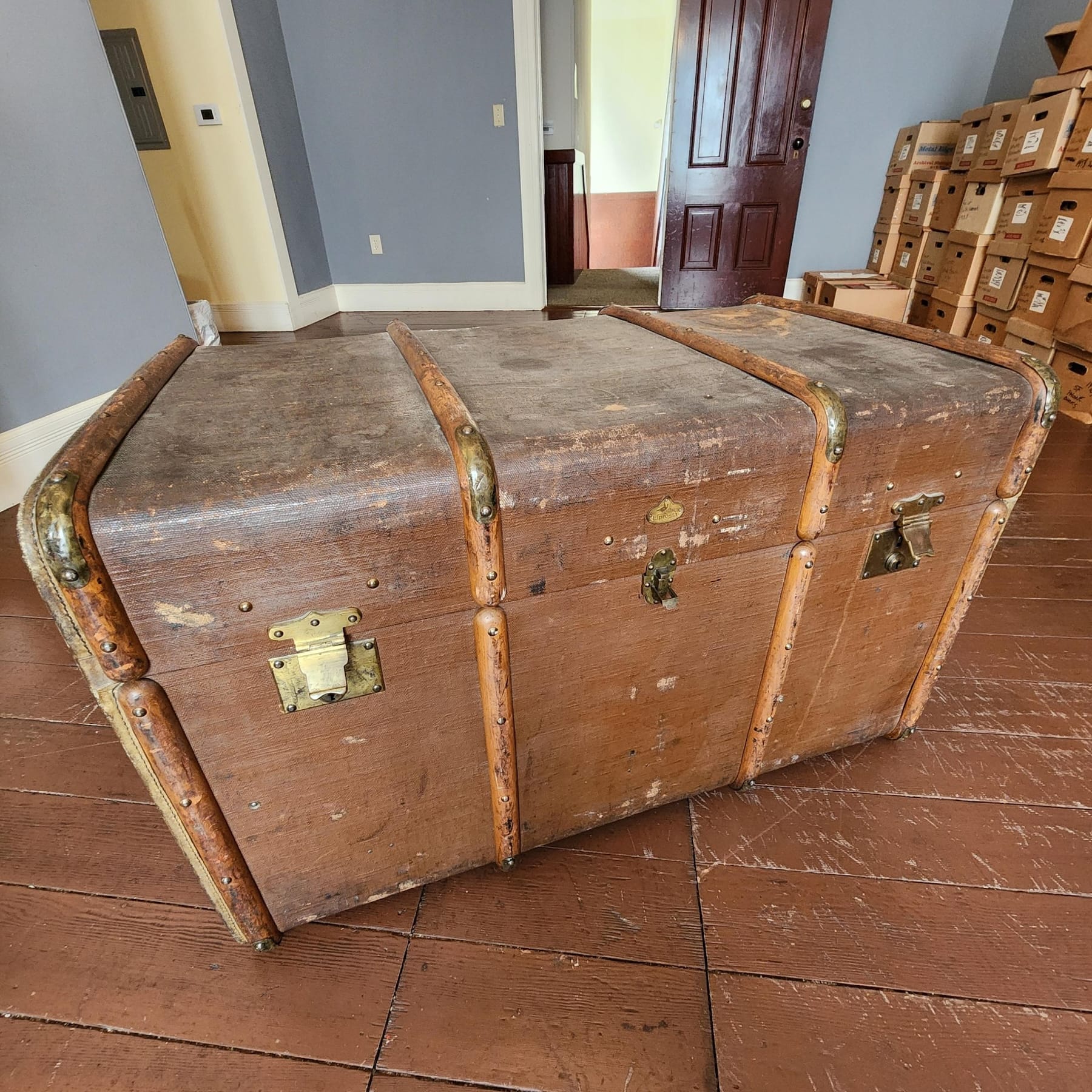
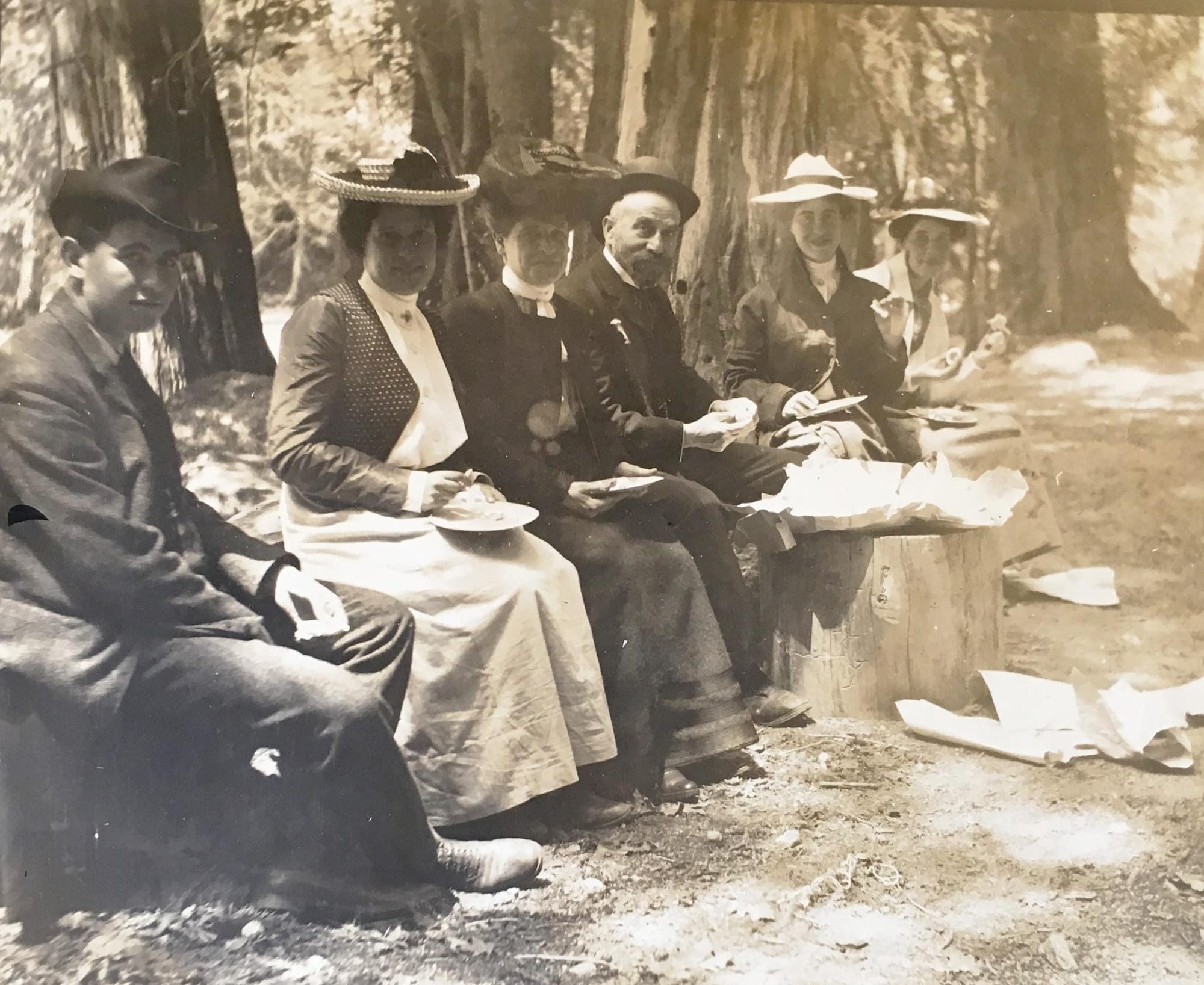
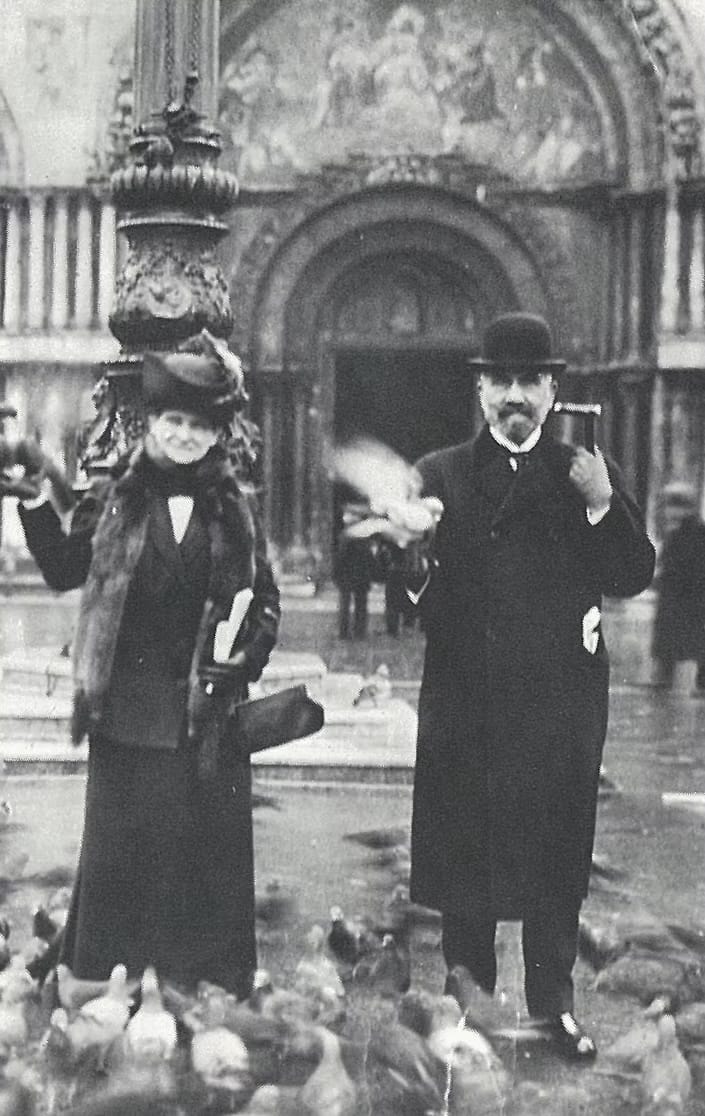
William Haas, owner with his wife Bertha of the 1886 Haas-Lilienthal House (2007 Franklin Street), had his own traveling trunk that he took on family vacations. By the 1870s, William had ascended from clerk to partner at his family’s wholesale grocery business, become a successful businessman, and joined the ranks of the German-Jewish aristocracy in San Francisco; this afforded him and his family the advantages of an upper-class lifestyle, including long vacations both in California and abroad.
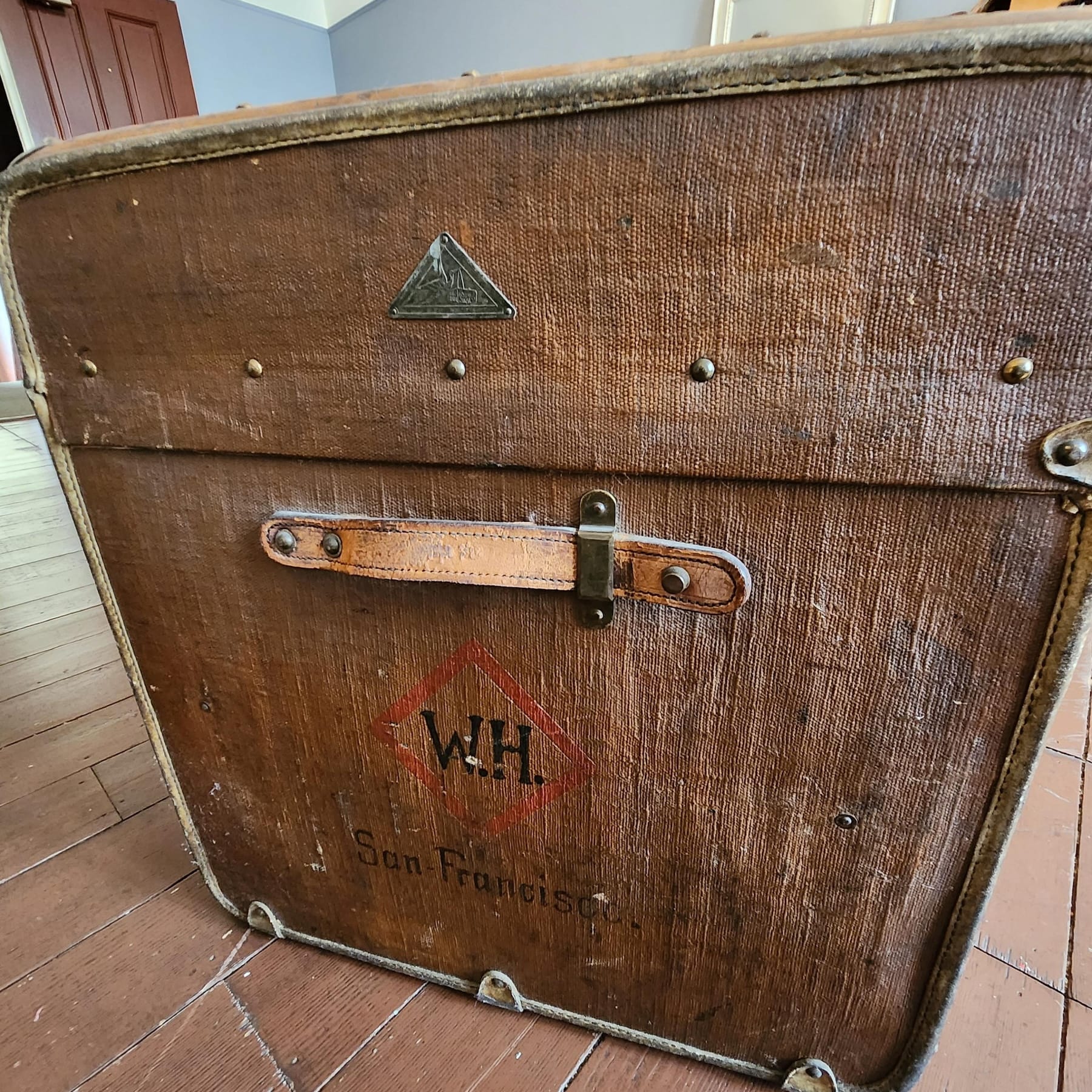
Haas trips included annual month-long holidays at Lake Tahoe and first-class tours of Europe. When William and Bertha went abroad in 1888, they were accompanied by their three children (six, four, and three-years old at the time) and a governess.
William’s trunk has a round top, a design meant to encourage water run-off. By the end of the 19th-century, this was considered out of vogue to newer flat-top trunks exemplified by Louis Vuitton:
The modern trunk has a flat top, and the round-topped trunk of only a few years ago now looks old-fashioned beside it. The flat-topped trunk stacks easier in a baggage car, it packs away better in a store-room and it makes a very good seat in a room in a summer hotel…
—Good Housekeeping, June 1897
The family moved with the times and in the Haas-Lilienthal House collection we also have an LV flat-top trunk! (A story for another day.) Neither trunk is currently on display in the house museum, but we are eyeing some good locations to bring them on public view.
Our great thanks to the descendants of William’s great-granddaughter Anne Gerstley for gifting the William Haas trunk to SF Heritage last year.
Travel on down to the Haas-Lilienthal House to learn more. Our docents will point out some beautiful items brought back from some of the family’s travels. Wednesdays at 12:30 pm and 2 pm, Saturdays at 12 pm, 1 pm, and 2 pm.
An indie music haven in an old firehouse
meet us at Kilowatt next week
Over 100 of you attended last month’s Heritage Happy Hour at the Gregangelo Museum, a wild and creative oasis tucked into a residential street of Balboa Terrace. Thank you to our hosts for laying out the impressive spreads and for the heartfelt words on the importance of the Legacy Business Registry program.
If you missed the Happy Hour, sign up for your own Alice in Wonderland-like experience at the museum.
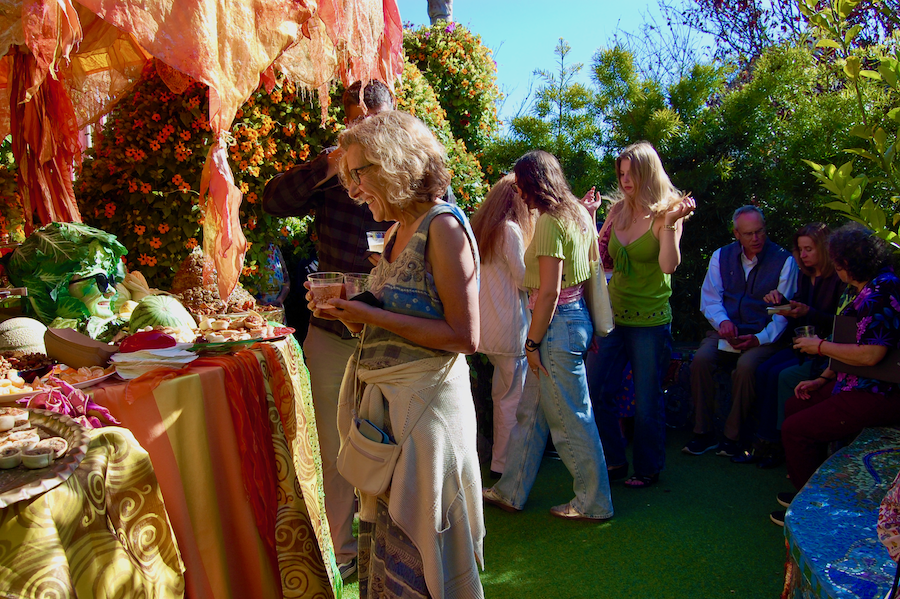
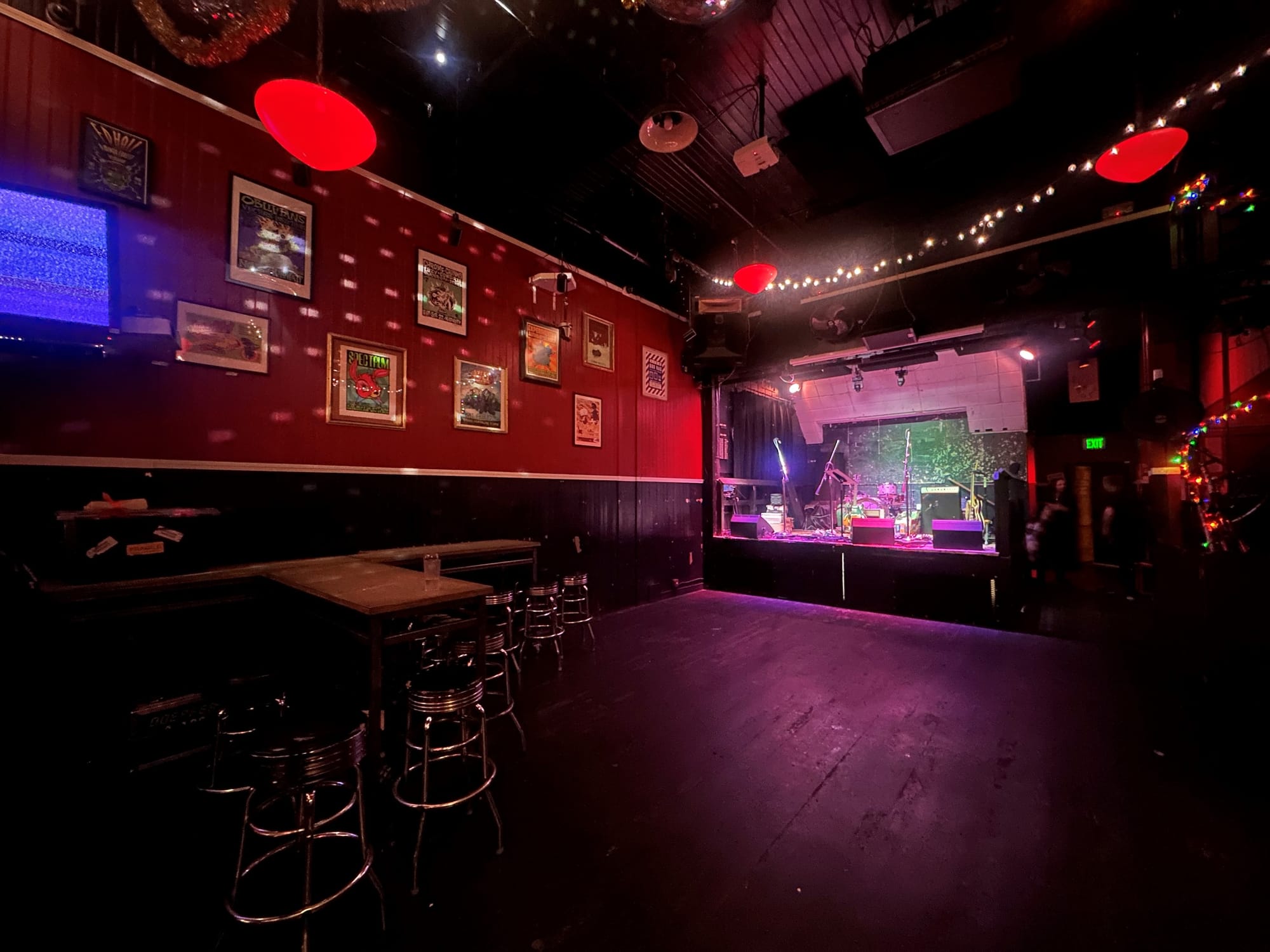
Next Thursday, July 9, 2026 from 5-7 pm, we travel to the Mission District for a visit to bar and music venue Kilowatt (3160 16th Street).
A firehouse, Engine No. 7, opened in a two-story building on this site in 1886. Severely damaged in the 1906 earthquake and fire even as its engine and crew went out to deal with the disaster, the building was rebuilt as the edifice seen today.
Serving as a San Francisco Fire Department station until the 1960s, the building was used in the 1970s as the Firemen’s Toy Shop, where firefighters repaired broken toys and bikes as Christmas presents to needy kids. (A antecedent to the SFFD holiday toy drives of today).
Kilowatt opened in 1994 and serves the community in a different way through music and hospitality. It carries on a tradition started by independent music venues The Compound and Firehouse 7 which transformed the former firehouse into a punk, rock, jazz, world music, and sex-positive queer scene meeting place.
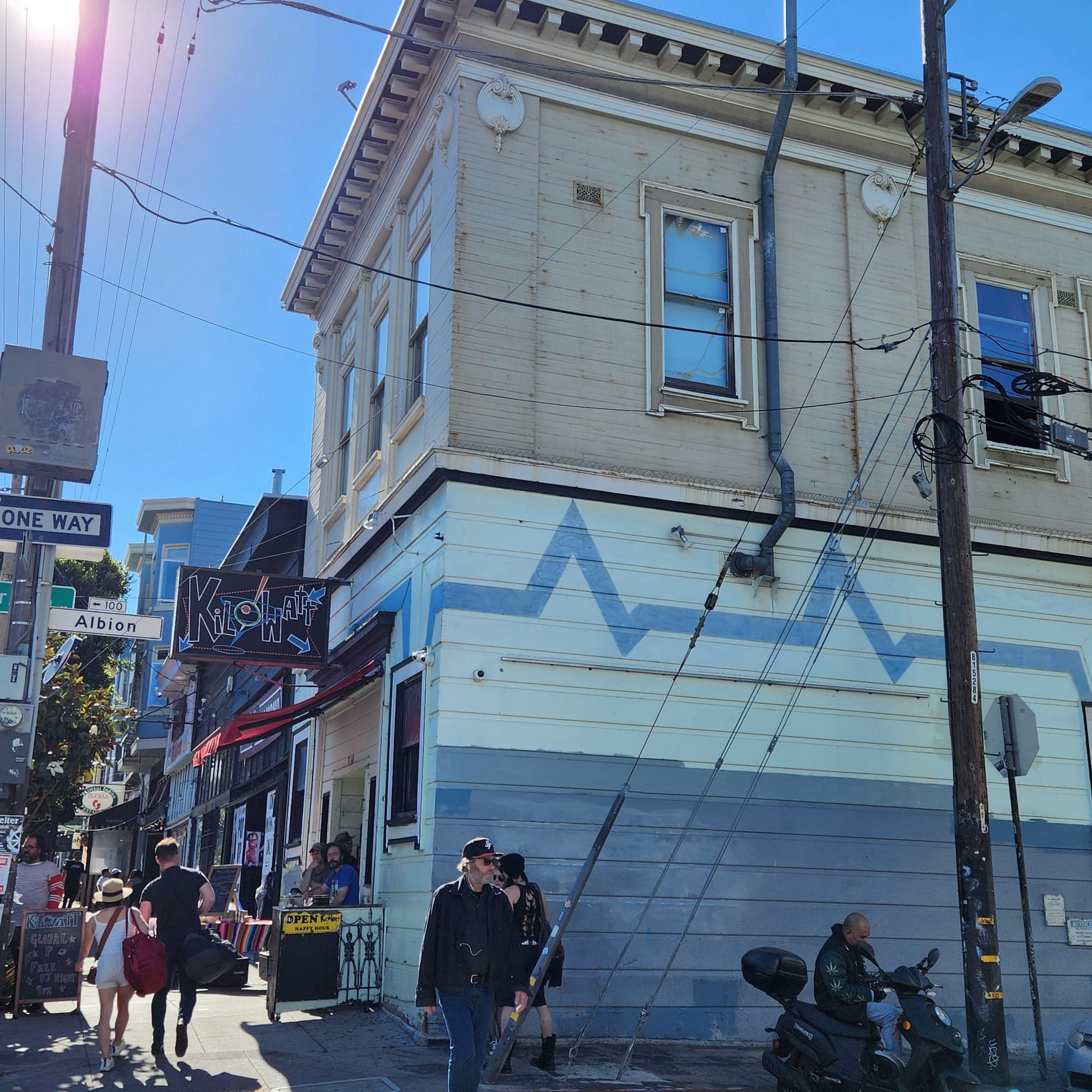
The live music economy has been under duress in San Francisco. Kilowatt’s owners, Katherine Rose McCarthy, Peter Niven, and Richard Eusey, took over from original owner Peter Athanas in 2022. They were all previously bartenders at Potrero Hill’s independent music venues Bottom of the Hill and Thee Parkside, both of which announced their closures in 2026. Despite the hard times, the owners are committed to “ensuring that Kilowatt remains a music centered, artist-first, community space for as long as the building remains standing.”
One of the best ways to support legacy businesses like Kilowatt is by visiting them, and our happy hour next week gives you a great excuse! You can also check out their live music calendar (if karaoke is your thing they also offer you the stage on occasional nights).
Register now to join us on July 9.

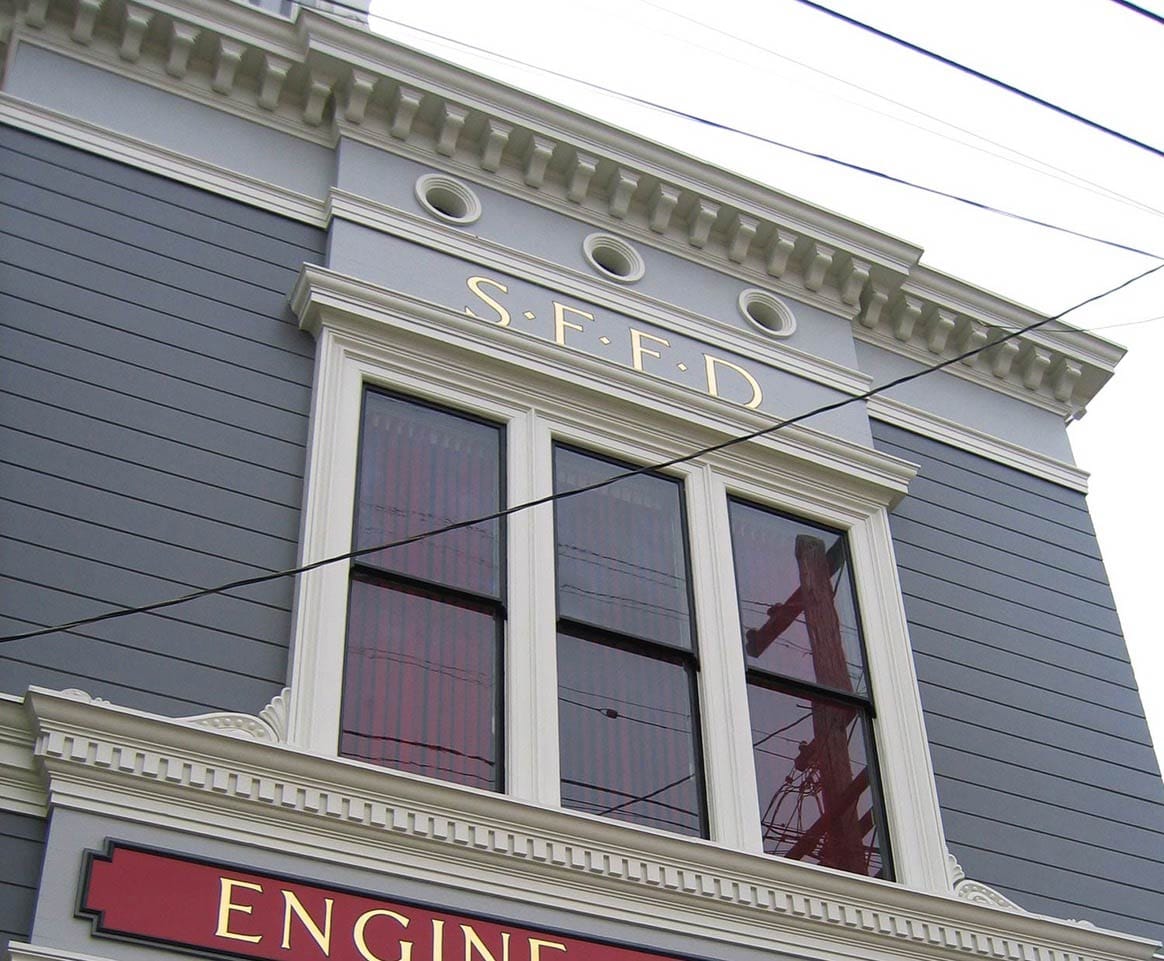
Smoke and Fog
where am I?
Our “Where Am I?” is not the Kilowatt building, but it certainly has some features and history in common. Do you have an idea? We will share more on this historic site with our Local Hero and Landmark Club members next Special City email. (Sign up or update your account here)

We see that we are starting to get some of our first renewals for Special City memberships! Thank you all for continuing to read, engage, and support us. Share your comments (and your travel plans!) and tell us how you're engaging with all our city has to offer.
Founded in 1971, San Francisco Heritage is a 501(c)(3) membership organization that preserves and enhances San Francisco’s unique architectural and cultural identity. Our programs and partnerships interpret, share, and celebrate the shared histories, landscapes, and communities of the city to instill optimism, belonging, and purpose.

Member discussion